4 February 2026,
Wednesday


4 February 2026,
Wednesday
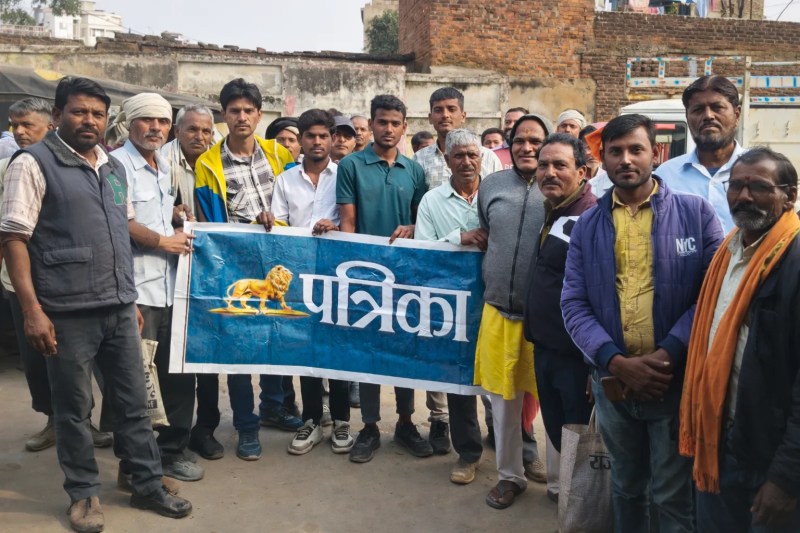
Image: Patrika
Farmers, who form the backbone of the country, have high enthusiasm and expectations from the Union Budget to be presented by the Central Government on February 1. On Monday, during a 'Patrika Talk Show' organised at the Paharua Agricultural Produce Market, farmers openly shared their budget-related expectations. The farmers stated that if concrete decisions are taken in the budget with agriculture at its centre, the rural economy will be strengthened.
Farmers demanded uninterrupted 24-hour electricity supply and promotion of solar energy to reduce electricity expenses. They also sought assurance of fair prices for their crops. Farmers put forth demands for increasing irrigation facilities, providing actual benefits of crop insurance for annual losses, promoting organic farming, and making separate provisions for it.
Farmers also emphasised the need for focus on agricultural education and training. They requested the inclusion of modern technology, drones, and smart farming in the budget to connect youth with agriculture, encouraging the new generation to take up farming. Expectations from the budget include an increase in the Kisan Samman Nidhi amount, as the current sum is insufficient in the face of inflation. An increase in assistance would provide relief to farmers for initial farming expenses.
Among the major problems highlighted was the timely and adequate availability of fertilisers. Farmers stated that fertilisers should be made available not only at the block level but also through ration shops, so they do not have to wander around. In the talk show, farmers unanimously agreed that only a budget connected to the ground would enable farmers to become self-reliant.
Expectations from the Union Budget include 24-hour electricity for farmers. If solar energy is promoted and farmers receive solar pumps at affordable rates, farming costs will decrease.
The Minimum Support Price (MSP) for crops should be increased so that farmers receive fair compensation for their hard work. The fertiliser problem troubles farmers every year. The budget should include provisions for timely and adequate supply of fertilisers.
If fertilisers are available at the block level and through ration shops, farmers will not have to stand in queues. This will enable timely farming. The crop insurance scheme should be further strengthened.
Natural calamities cause losses every year, but insurance benefits are not received. The budget should have provisions for farmers to receive insurance amounts immediately upon incurring losses, so they can resume farming.
Special attention should be given to the expansion of irrigation facilities in the budget. Canals, ponds, and water conservation schemes should be increased. If water availability is ensured, farmers can cultivate two to three crops annually, increasing their income.
There is a need to promote organic farming. For this, farmers should receive training, subsidies, and market facilities. A separate package for organic farming should be announced in the budget, encouraging farmers to move towards chemical-free agriculture.
The biggest problem is the fair price for crops. Farmers work hard but do not get a proper price in the market. The budget should enact a law ensuring farmers receive a price above their cost, only then will farming become a profitable business.
Subsidies on agricultural equipment should be increased. Small farmers cannot afford expensive machinery. If more subsidies are provided for machinery in the budget, farming will become modern, and production will also increase.
Cold storage and warehouse facilities should be increased in villages. Due to the lack of storage facilities, farmers are forced to sell their produce at low prices. Special provisions for storage facilities are essential in the budget.
Farmers should receive agricultural loans at affordable rates and adequate time to repay them. The budget should announce a reduction in interest rates and relief on old loans.
Big News
View AllKatni
Madhya Pradesh
Trending
Budget 2026