5 June 2026,
Friday

5 June 2026,
Friday
‘Hate Speech’ has emerged as a significant challenge to communal harmony and mutual brotherhood in India. The recently released ‘Hate Speech Events in India 2025’ report and recent observations by the Supreme Court have raised serious questions about the country's current scenario. This deluge of hate speech is not confined to streets and rallies but has also deeply entrenched itself in the digital world, sounding an alarm for the nation's democracy. The ‘India Hate Lab’ report by the Washington-based ‘Center for the Study of Organized Hate’ (CSOH) has made alarming revelations about the growing influence of hate speech in Indian politics and social fabric. According to the report, last year, 1,318 hate speeches were made in the country. The report, claiming 1,318 hate incidents, states that inflammatory statements against minorities have increased by 13%, which is 97% more than in 2023.
According to the detailed report ‘Hate Speech Events in India 2025’ (CSOH), there has been a record increase in the frequency of inflammatory speeches in many parts of India over the past year. The report indicates that the elections and regional disputes in 2025 fuelled these incidents. Shockingly, organised narratives are now being crafted to spread hate. The report lists states where such incidents have been encouraged due to administrative laxity. It also highlights the influence of social media, where ‘hate content’ has gone viral manifold times faster than ordinary information.
According to the report, a total of 1,318 hate speech incidents were recorded in India in 2025. This means an average of 4 hate speeches were delivered daily in the country.
Primary Targets: Approximately 98% (1,289 incidents) of hate speeches were targeted at the Muslim community. Meanwhile, cases of hate against Christians saw a significant increase of 41%.
State-wise Situation: The highest number of incidents occurred in Uttar Pradesh (266), Maharashtra (193), Madhya Pradesh (172), and Uttarakhand (155).
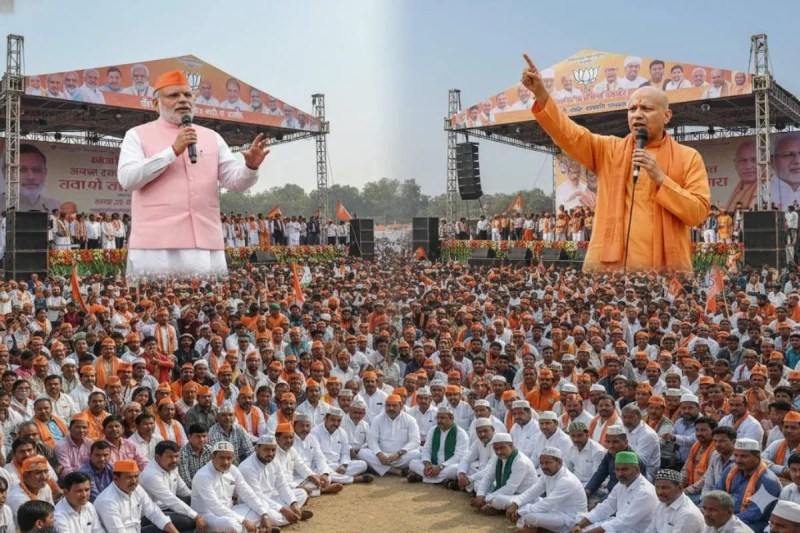
Political Connection: The report claims that about 88% of the incidents were recorded in BJP-ruled states or union territories.
The report claims that Uttarakhand Chief Minister Pushkar Singh Dhami emerged as the ‘most active’ hate-speech perpetrator in 2025. His speeches often included controversial remarks on issues like ‘land jihad’ and demographic changes.
The report has prepared a list of leaders and individuals who made the most inflammatory statements in 2025. Based on ‘rating’ or number, the top three names are as follows:
Pushkar Singh Dhami, Chief Minister, Uttarakhand Hate Speech 712
Pravin Togadia, President, International Hindu Parishad Hate Speech 463
Ashwini Upadhyay, BJP Leader and Advocate Hate Speech 35
The release of this report has caused a stir in political circles. Opposition parties have termed it a ‘defeat of democracy’ and demanded a response from the ruling party. Meanwhile, supporters of the Uttarakhand government argue that the Chief Minister is merely speaking about the state's security and culture, and calling it ‘hate speech’ is incorrect. Human rights activists have demanded the immediate enactment of a strict central law defining hate speech to maintain constitutional integrity.
Another aspect of this report is ‘electoral timing’. Analysis suggests that the frequency of these speeches increases whenever elections are near in any state. This indicates that ‘hate speech’ is no longer just an individual opinion but has become an ‘electoral tool’. Its economic impact is also severe; areas living under the shadow of hate have seen a decline in income by up to 20% for small traders and daily wage labourers, as communal tensions force markets to shut down.
A significant portion of the 2025 report is dedicated to ‘digital hate speech’. In the age of technology, hate speeches are no longer confined to closed rooms or rallies. Misleading and inflammatory content has been spread using technologies like AI and deepfakes. Experts believe that those spreading hate are now exploiting legal loopholes to destabilise society from a safe distance. This report has also raised questions about the accountability of tech companies, which are often slow to remove such content.
The country's apex court has expressed concern over the rising incidents of hate speech. According to BBC and other judicial reports, the court has clarified that ‘hate speech’ is not an offence against any one community but against the Constitution of India and its ‘secularism’. The court has directed state governments that if any person delivers a speech that poisons society, the police should immediately register a case without waiting for a formal complaint. The court's message is clear: administrative inaction is tantamount to tacit approval of those spreading hate.











No comments yet.
Be the first to comment.