5 June 2026,
Friday
5 June 2026,
Friday
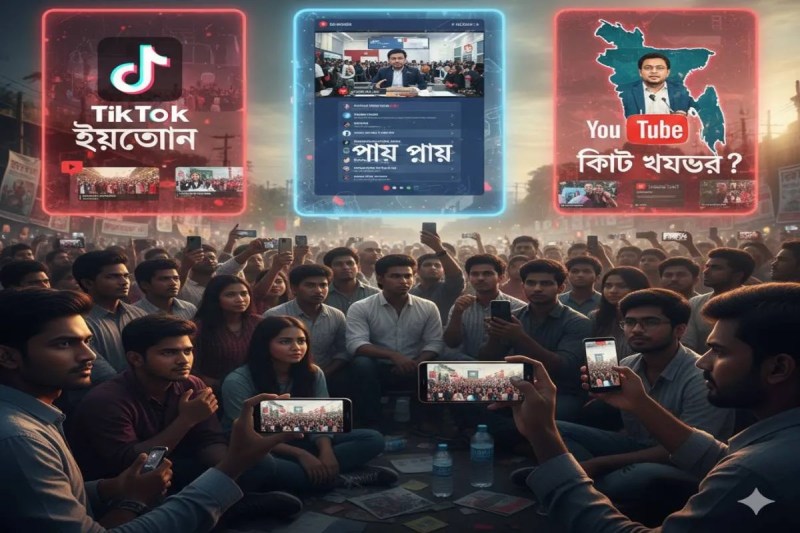
Politics in Bangladesh has now moved beyond the streets of Dhaka to smartphone screens. Although candidates began campaigning door-to-door from Thursday, the real 'war rooms' became active on social media platforms months ago. Major parties like Awami League and BNP are now using Facebook, YouTube, and TikTok as their biggest weapons. Bangladesh has millions of young voters who spend most of their time online. Political parties know that a viral TikTok video or a Facebook Live has the power to change the opinion of millions. Where large posters and loudspeakers once dominated, a battle of algorithms and data analytics is now being waged.
Facebook is the primary source of information in Bangladesh, hence the biggest competition to set the narrative is happening here.
Attempts are being made to influence voters through long video reports and debates in the country.
Direct reach is being established to rural and young voters through short, impactful videos.
Reports often mention neighbouring Nepal, where political instability and coups were witnessed after the ban on TikTok. Concerns are also being raised regarding Bangladesh, whether a ban or excessive monitoring of social media could pose a threat to democracy. A fine line has been drawn between the Digital Security Act and freedom of expression, on which a heated debate continues between the government and the opposition.
The biggest threat in this digital election is 'fake news' and 'deepfake' videos. Efforts to mislead voters by creating fake videos of leaders using AI have intensified. This not only raises questions about the fairness of the election but also increases polarisation in society.
Experts believe that this election in Bangladesh will be a test of "digital literacy". It is becoming difficult for voters to identify which news is true and which is sponsored. The responsibility of social media platforms has also increased more than ever to ensure their platforms are not used to spread hate.
An interesting aspect is that social media has also given a voice to ordinary citizens and youth. Now, not just big leaders, but also small bloggers and influencers are becoming part of the political discourse. Whether this is 'digitisation of democracy' or 'a new form of propaganda' will be decided by the election results.
As the polling date approaches, issues of internet censorship and data privacy will heat up further. Will the Election Commission be able to curb the expenses of these digital advertisements and campaigns? Will opposition parties get equal opportunities in the online space? The answers to these questions will determine Bangladesh's political direction in the coming weeks.







No comments yet.
Be the first to comment.